- Y/N Questions
- WH Questions
- Declaratives
- Negations
- Affirmatives
- Topic/Comments
- Commands/Imperatives
- Rhetorical Questions
- Conditionals
- Relative Clauses
Y/N Questions
COFFEE YOU LIKE?
Nonmanual marker: The eyebrows are raised a bit and the head slightly tilted forward.
WH Questions
YOU LEARN SIGN, WHERE?
Nonmanual marker: The eyebrows are furrowed a bit (squeezed somewhat together) and the head moved slightly forward.
It is common to put the “WH”-type sign at the end of the question thus avoiding the need to maintain a furrowed brow throughout the whole sentence.
Declaratives
“I WILL.” (I’ll do it.)
Affirmative Declarative sentences:
Sign with a nodding of the head.
Example: “I WILL.” (I’ll do it.)
Negative Declarative sentences:
Sign with a shaking of the head.
Example: “I can’t.”
Neutral Declarative sentences:
Nonmanual marker: Use a neutral head position and little or no shaking or nodding.
Example: INDEX-“I/me” GO STORE. (“I’m going to the store.”)
Negations

NOT HAPPY
ASL (glossed as): IX-pronoun NOT HAPPY. English: She/he is not happy. This phrase comes with stress – shaking head when signing NOT HAPPY.
Negative Marker
- side to side headshake
- frown expression (eyebrows squeezed, sometimes nose wrinkled)
- pursed lips, or loose lips
Affirmatives
MY ASL CLASS I LIKE
Declarative statements that confirm something as true, often using a head nod to reinforce the affirmation.
A head nod is a key non-manual marker used to confirm or affirm a statement.
Topic/Comments
WEEKEND ME SLEEP IN
The topic refers to the main subject or focus of the sentence. The comment is what is being said about the topic.
Non-manual markers for the topic
- Raised eyebrows: Raise your eyebrows while signing the topic.
- Forward head tilt: Slightly tilt your head forward towards your signing hand.
- Hold and pause: Hold the last sign of the topic slightly longer than usual and pause briefly before signing the comment.
- Eye contact: Maintain eye contact with the person you are addressing.
Non-manual markers for the comment
- Headshake (for negation): If the comment is a negative statement, use a headshake to convey the negation, such as in the sentence “ice cream I don’t like”.
- Nod (for affirmation): A nod can be used for affirmation before proceeding to the comment.
- Body shifts: Use body shifts to indicate different roles or to contrast information.
English: “I sleep in on the weekends.” ASL Topic/Comment:
- WEEKEND: Topic: (with raised eyebrows, forward head tilt, and a slight pause after the sign).
- ME SLEEP-IN: Comment: (with a nod for affirmation at the end).
Commands/Imperatives
YOU SIT DOWN
Imperative sentences give commands or make requests.
Non-manual markers:
Facial expressions are crucial for conveying the intent. A direct stare, possibly with a frown, can show a command.
Rhetorical Questions
INDEX-(he) FAIL CLASS, WHY? STUDY-(neg)
English: He failed the class because he didn’t study.
To use a rhetorical question, make a statement using neutral expressions, then ask a “wh”-type of question–but instead of having your eyebrows down–raise your eyebrows during the “wh” sign. Then answer your own question using either a head nod or a head shake depending on whether your answer is declarative or negative.
Conditionals
TOMORROW RAIN? GAME CANCEL.
English: If it rains tomorrow, the game is canceled
Raise your eyebrows during the “if” part of the sentence, then use a declarative nod for the “then” part of the sentence.
English: If you finish your chores, you can watch TV.
ASL: CHORES FINISH, YOU TV WATCH.
- Explanation: The non-manual markers for the “if” clause are applied to the first part of the sentence
Relative Clauses
DOG CHASE CAT COME HOME
English: The dog that chased the cat came home.
Key sign/NMM- THAT-ONE, ITSELF (-CAN), pronoun/possessive, index pointing, eyebrows raised/down, clenched teeth, squeezed nose, rapid nodding, pursed lips
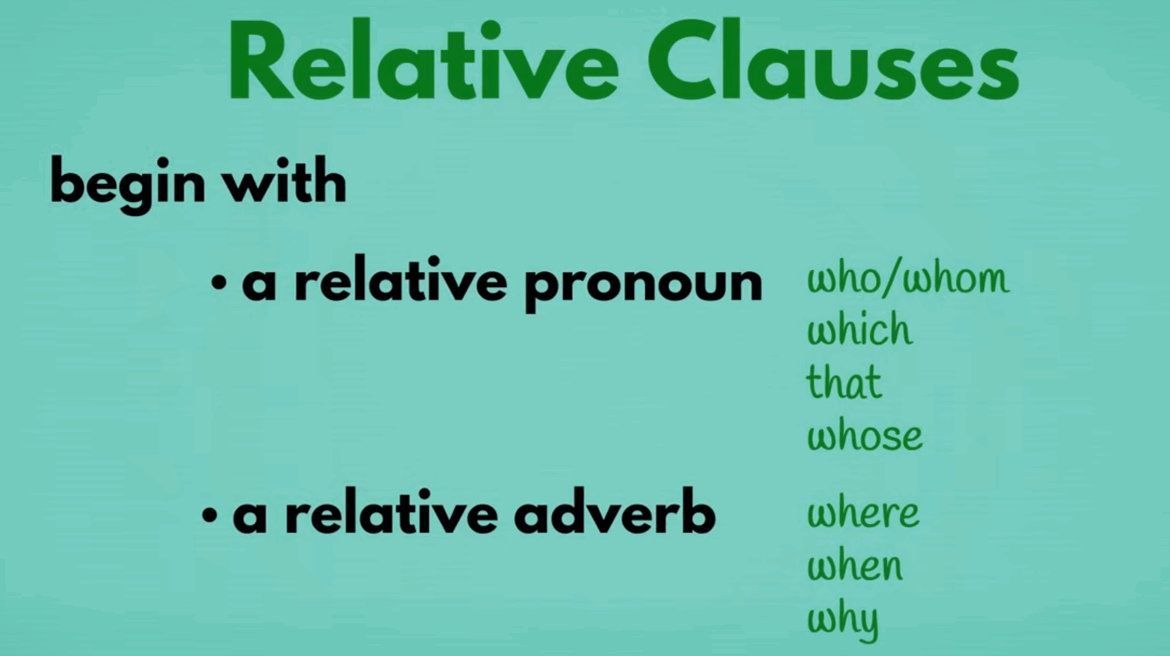
ASL relative clauses are formed without explicit English-style relative pronouns like “who” or “that.” Instead, they use non-manual signals (like a backward head tilt, raised eyebrows, and tensed upper lip) to mark the clause, and they can be structured as externally-headed or internally-headed relative clauses. A signer may also use a specific manual sign for “relative” or simply use the topic-comment structure, where the relative clause acts as a comment on the preceding topic.
Non-manual markers: These are crucial for identifying the relative clause. They include a backward head tilt, raised eyebrows, and a tensed upper lip.
Topic-comment structure: A common way to form relative clauses is by presenting the topic first, followed by the relative clause as a comment. For example, for “The man who is wearing a blue shirt is my father,” an ASL signer might sign MAN, HE, BLUE SHIRT, then MY FATHER.
In English