50,000+ years ago
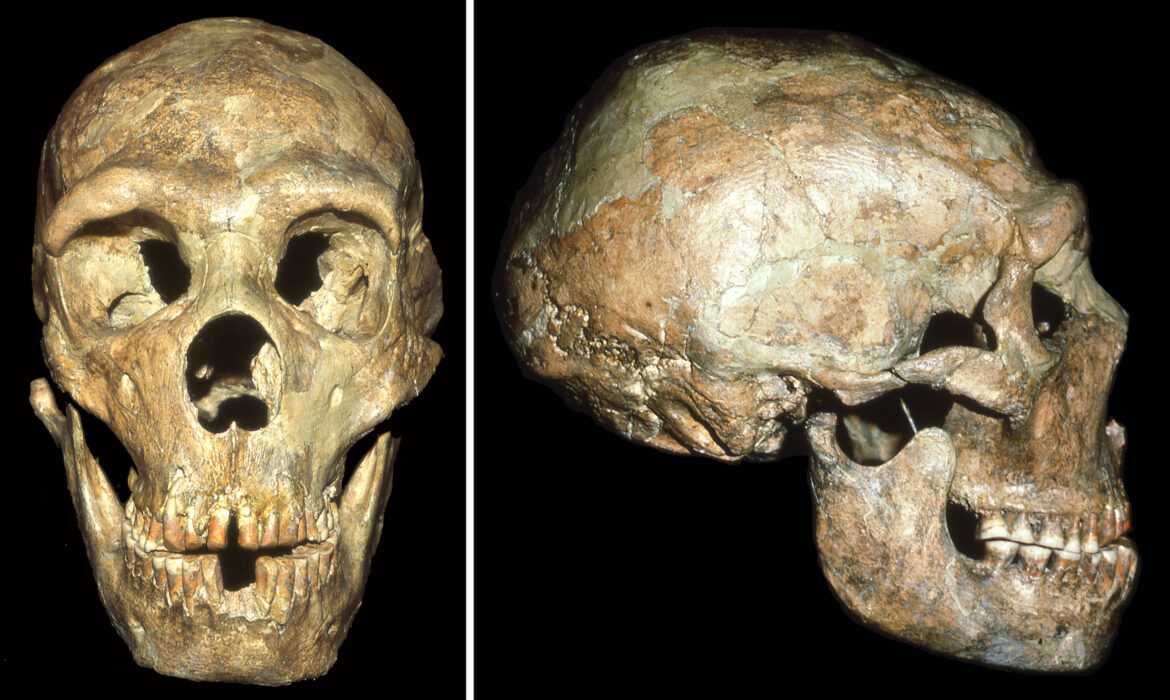
Shanidar 1, a Neandertal man discovered in Shandiar Cave, Iraqi Kurdistan
Despite being deaf, sustaining multiple debilitating injuries, and missing part of his arm, he managed to live well into his 40s, indicating he received help from others to survive the dog-eat-dog world of the Pleistocene era.
30,000 years ago

Gargas Cave – Pyrenees region of France
Cave Paintings May Depict Ice Age Sign Language
Ancient stencils of hands with “mutilated” fingers may actually show a type of sign language used for hunting or silent rituals.
1550 BC
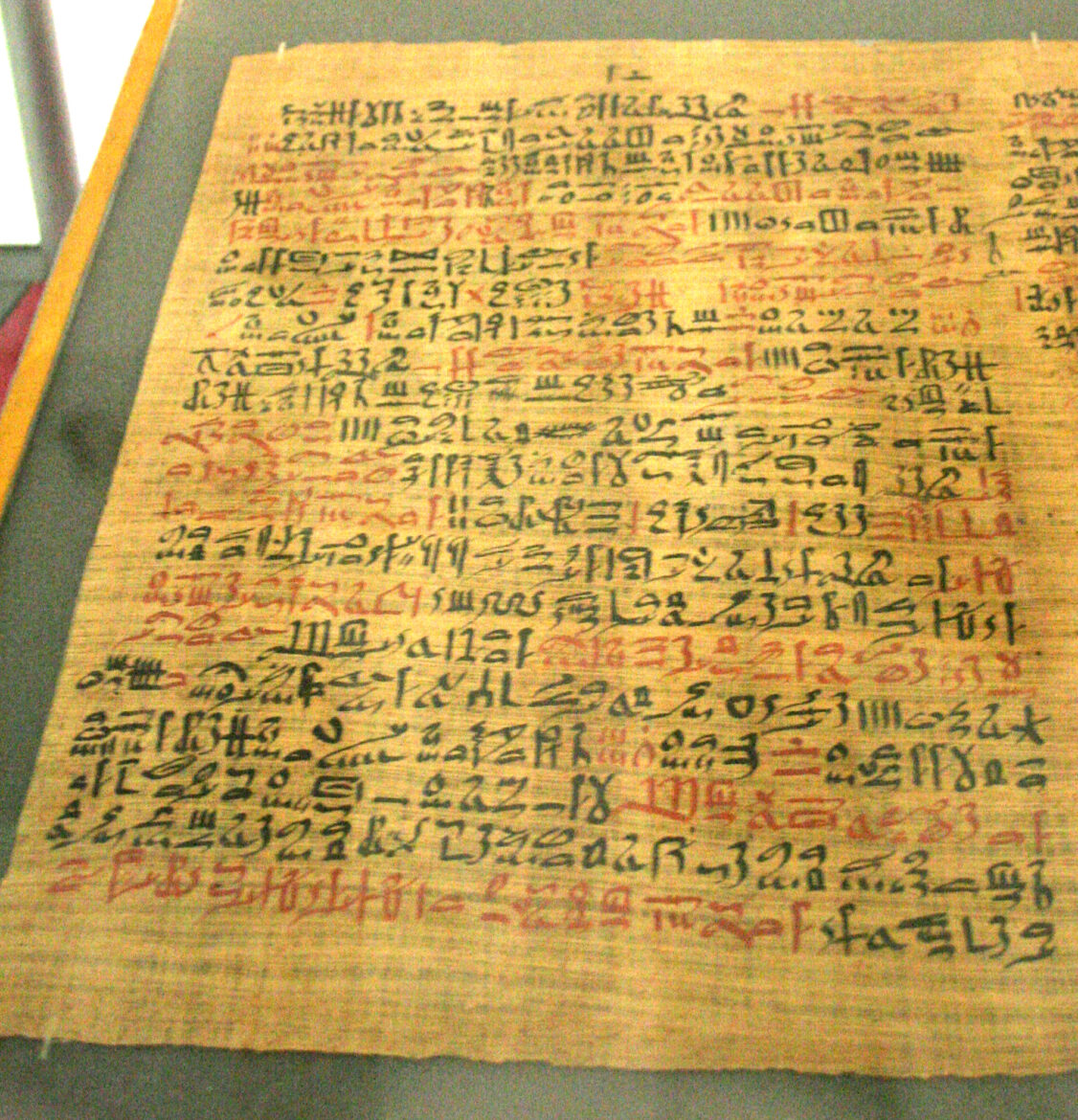
Ancient Egypt – Earliest written record of hearing loss
The Ebers Papyrus offers a remedy for ‘Ear-That-Hears-Badly’: injecting olive oil, red lead, ant eggs, bat wings and goat urine into the ears. Whether ‘Ear-That-Hears-Badly’ refers to temporary hearing loss caused by simple wax build up, which may have actually been treatable with olive oil (although perhaps not ant eggs), the Ancient Egyptians were instructed to be kind to disabled individuals, including the deaf.
350 BC
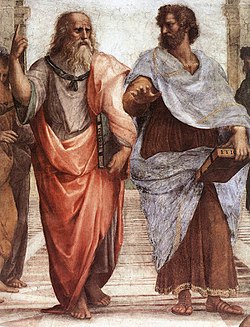
Greece – Aristotle and Plato
They wrote the ability to reason was intrinsically linked with the ability to speak and therefore individuals who were deaf ‘from the first’ (either from birth or before they learned to speak) would inevitably be unintelligent. This attitude prevailed throughout much of history and those who were unable to speak, including many deaf individuals, were rarely considered independent adults with access to full civil liberties.
It is Plato who also gives us the first reference to sign language, in his dialogue on language and reality, Cratylus: ‘If we had no voice or tongue, and wished to make things clear to one another, should we not try, as dumb [mute] people actually do, to make signs with our hands and head and person generally?’ Despite recognising that people communicate through sign, its value is not acknowledged.
The Great Library of Alexandria
The Great Library of Alexandria was a legendary center of knowledge in the ancient world, but its precise nature, contents, and destruction are shrouded in myth and mystery. It was part of a larger institution, the Mouseion, and aimed to collect all the world’s texts. While no original building survives, its ultimate fate was likely a series of destructions due to fires and conflicts, not a single catastrophic event.
900-930 AD

Monks in Burgundy – Cluniac sign language
The earliest reference to specific signs comes from monks. Monks in Burgundy created a series of hand signals to communicate without speaking. Cluniac sign language, as it came to be known, had an enormous influence on monastic life throughout Europe. It is credited with being the inspiration for the manual alphabet (finger-spelling) developed by the Spanish Benedictine Pedro Ponce de Leon at the first deaf school in the mid-1500s.
1400s Renaissance
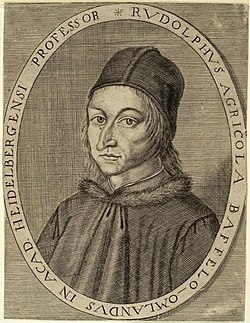
Rudolf Agricola – Dutch humanist
Believed the Deaf could communicate via writing. He advocated the theory that the ability of speech was seperate from the ability of thought. He wrote about a Deaf person who was taught to read & write.
1500s Renaissance

Girolamo Cardano – Italian Physician
The first physician to recognize the ability of the Deaf to reason and the first to challenge Aristotle’s belief that hearing was a requirement for understanding. His firstborn son was deaf.
Pedro Ponce de León – Spanish Benedictine monk
Ponce de Leon established a school for the Deaf at the San Salvador Monastery in Oña. His students were almost all children of wealthy aristocrats who could afford private tutoring. His work with deaf children focused on helping them to learn how to speak language audibly. He also instructed children in writing and in simple gestures. He may have developed a manual alphabet which would allow a student who mastered it to spell out (letter by letter) any word. This alphabet was based, in whole or in part, on the simple hand gestures used by monks living in silence.
1600s Renaissance

Juan Pablo Bonet and Manuel Ramírez de Carrión – Educators of the Deaf
They took over for Pedro Ponce de Leon. Juan Pablo Bonet and Manuel Ramírez de Carrión were contemporaries and predecessors in deaf education in Spain, with Ramírez de Carrión being the teacher of prominent deaf individuals like Luis de Velasco, and Bonet being the author of the first book on deaf education (“Summary of the letters and the art of teaching speech to the mute”) in 1620. It depicts the first documented manual alphabet for the purpose of deaf education. His intent was to further the oral and manual education of deaf people in Spain. Bonet’s manual alphabet has influenced many sign languages, such as Spanish Sign Language, French Sign Language, and American Sign Language.
George Dalgarno – Scottish Intellectual
He published a book on methods for teaching the deaf (Didascalocophus: Or, the deaf and dumb man’s tutor). He placed great emphasis on early intervention, advocated finger spelling of words in space. His fingerspelling alphabet had an influence on the BSL alphabet.
1700s
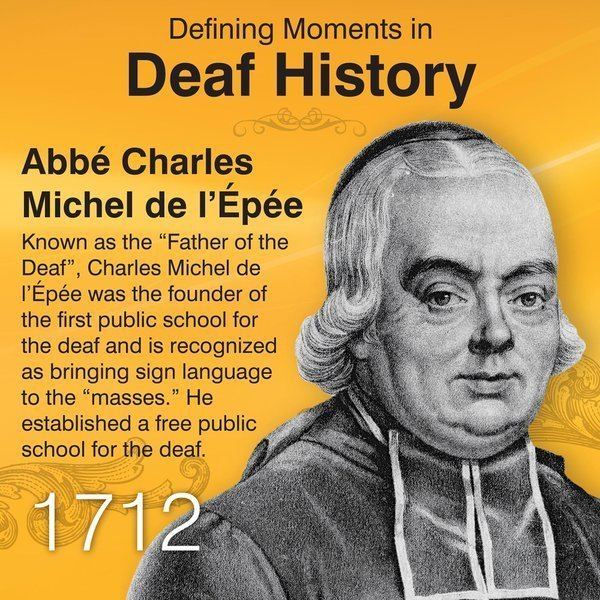
Abbe Charles Michel de l’Epee – French Catholic Priest
A philanthropic educator who has become known as the “Father of the Deaf”. He founded the Institut National de Jeunes Sourds de Paris, the first public school for the deaf, in 1760. His methods of education have spread around the world, and l’Épée is seen today as one of the founding fathers of deaf education. L’Epee supported the school at his own expense until his death. After his death, the government began to support the school. His successor was the Abbe Roch Concurrou (Curcurran) Sicard (1742-1822). Jean Massieu was the first deaf teacher.
Thomas Braidwood – Educator
A Scottish educator, significant in the history of deaf education. He was the founder of Britain’s first school for the deaf